In modern high-tech manufacturing,cleanroom environments are designed to control particulate contamination at extremely low levels.However,as production processes become more sensitive and components continue to shrink in size,traditional particle control alone is no longer sufficient.Airborne molecular contaminants,commonly referred to as AMCs,have emerged as a major threat to product quality,process stability,and equipment reliability.This is why the AMC Filter has become a critical component in advanced cleanroom air filtration systems.
Unlike visible particles that can be captured by HEPA or ULPA Filters,AMCs exist in gaseous or molecular form.These contaminants often originate from construction materials,chemical processes,cleaning agents,outdoor air intake,or even human activity within the cleanroom.Because of their molecular size,AMCs can easily bypass conventional particulate Filters and directly interact with sensitive surfaces,leading to corrosion,chemical reactions,or performance degradation.
One of the primary reasons AMC Filters are essential in cleanroom environments is their role in protecting ultra-sensitive manufacturing processes.In industries such as semiconductors,pharmaceuticals,and precision electronics,even trace amounts of acidic,basic,or organic molecular contaminants can cause irreversible damage.An AMC filter is specifically engineered to adsorb and neutralize these molecular-level pollutants before they circulate within the cleanroom airflow.
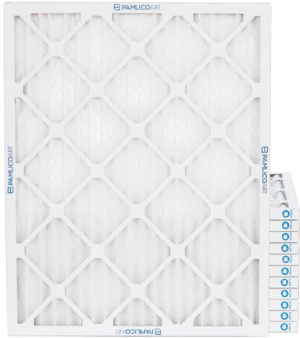
Cleanroom corrosion is a well-documented issue linked to airborne molecular contamination.Acidic gases such as sulfur dioxide(SO₂),nitrogen dioxide(NO₂),and hydrogen sulfide(H₂S)can corrode metal surfaces on equipment,tools,and product components.Over time,this corrosion leads to equipment failure,calibration drift,and costly downtime.By integrating an AMC filter into the air handling unit or recirculation system,these corrosive gases can be effectively removed,significantly extending equipment lifespan and reducing maintenance costs.
Another critical function of AMC filters in cleanrooms is yield protection.In high-value manufacturing environments,even a small yield loss can translate into substantial financial impact.Molecular contaminants can alter surface chemistry during critical process steps such as lithography,etching,coating,or bonding.This can result in defects,poor adhesion,or inconsistent performance.An AMC filter helps maintain a chemically stable atmosphere,ensuring that process conditions remain consistent from batch to batch.
Cleanroom standards and customer requirements are also driving the increased adoption of AMC filtration.As global manufacturing quality standards become stricter,many cleanroom specifications now include limits not only for particle counts but also for molecular contamination levels.Semiconductor fabs,for example,often specify allowable concentrations of acids,bases,dopants,and organic compounds in parts per billion(ppb)or even parts per trillion(ppt).Without an AMC filter,achieving and maintaining these levels is extremely difficult.
In pharmaceutical cleanrooms,AMC filters play an equally important role.Volatile organic compounds(VOCs)and chemical vapors can interact with drug formulations,packaging materials,or sterile environments,potentially affecting product stability and compliance.By removing these airborne molecular contaminants,AMC filters help manufacturers meet regulatory requirements and ensure consistent product quality.
From an operational perspective,AMC filters contribute to overall cleanroom stability.By continuously removing molecular contaminants from both makeup air and recirculated air,they reduce the chemical load within the environment.This leads to fewer process excursions,lower risk of contamination-related failures,and improved confidence in long-term production reliability.
The design flexibility of modern AMC filters also makes them suitable for various cleanroom configurations.They can be installed in air handling units,fan filter units,ceiling modules,or dedicated chemical filtration housings.Depending on the contamination profile,different chemical media—such as activated carbon,impregnated alumina,or blended adsorbents—can be selected to target specific AMC types.
In conclusion,AMC filters are critical in cleanroom environments because they address a category of contamination that traditional filters cannot handle.By removing airborne molecular contaminants,an AMC filter protects sensitive processes,prevents corrosion,improves yield,and ensures compliance with increasingly stringent cleanroom standards.As cleanroom technology continues to evolve,AMC filtration is no longer optional—it is a fundamental requirement for achieving true contamination control.