In high-tech manufacturing environments such as semiconductor fabs,display panel facilities,and advanced cleanrooms,airborne contamination is no longer limited to visible particles.While traditional particulate control methods like HEPA and ULPA Filters are highly effective against dust and aerosols,they are not designed to address airborne molecular contamination(AMC).This invisible but highly reactive class of contaminants has become one of the most critical challenges in modern fabrication processes.
AMC filtration is specifically engineered to remove these molecular-level pollutants from the air.Unlike particulate Filters,amc filtration targets gaseous and vapor-phase contaminants that can penetrate deep into sensitive production areas and directly interact with wafers,photomasks,and process equipment.Understanding what contaminants AMC filtration can remove is essential for manufacturers seeking to protect yield,reliability,and long-term process stability.
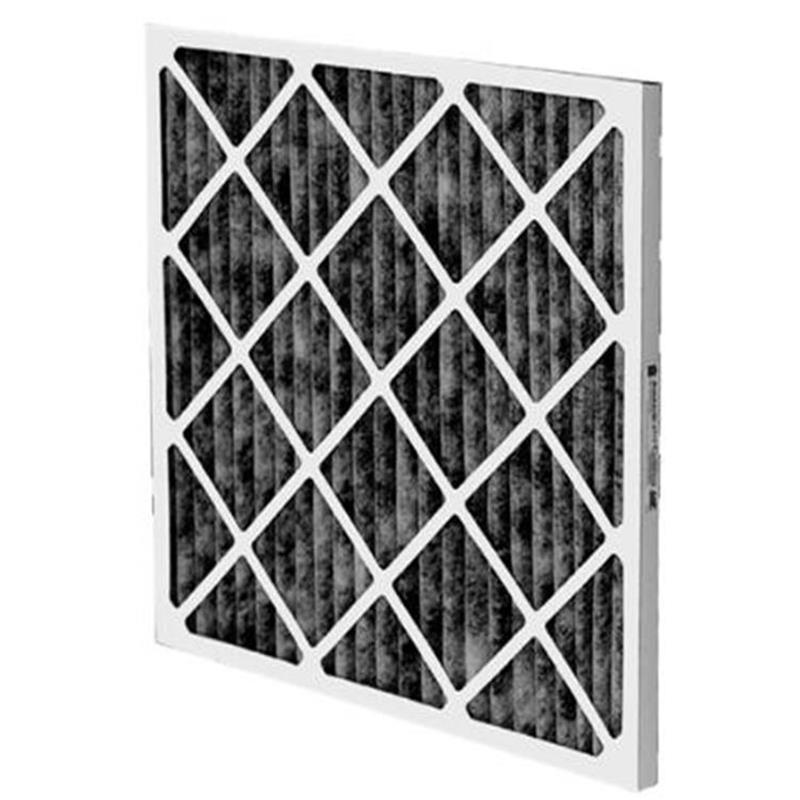
Airborne molecular contaminants are typically categorized by their chemical behavior rather than their size.One of the most common groups is acidic contaminants,such as hydrogen fluoride(HF),hydrogen chloride(HCl),sulfur dioxide(SO₂),and nitrogen oxides(NOx).These acidic gases often originate from chemical processes,wet benches,etching tools,and even outdoor industrial pollution that enters the cleanroom through make-up air systems.Without proper amc air filtration,acidic AMC can cause corrosion on metal layers,damage photolithography optics,and lead to critical dimension shifts on wafers.
Another major category addressed by amc filtration is basic(alkaline)contaminants,including ammonia(NH₃)and amines.These substances are frequently released from cleaning agents,construction materials,sealants,human occupancy,and certain process chemicals.In lithography environments,even trace amounts of ammonia can neutralize photoacid generators in chemically amplified resists,resulting in pattern deformation,line edge roughness,and incomplete resist development.AMC air filtration systems using chemically treated media are highly effective at capturing these basic molecules before they reach sensitive process zones.
Organic contaminants represent a third critical group removed by AMC filtration.These include volatile organic compounds(VOCs)such as hydrocarbons,aldehydes,ketones,plasticizers,and solvent vapors.Organic AMC may be released from lubricants,packaging materials,polymers,adhesives,and off-gassing construction components inside cleanrooms.Over time,organic molecules can condense on wafer surfaces or optical components,leading to haze formation,poor adhesion of thin films,and unpredictable process outcomes.High-performance amc Air Filtration Media,particularly activated carbon and impregnated adsorbents,are designed to trap a wide spectrum of organic contaminants with high efficiency.
In addition to acids,bases,and organics,dopant-related contaminants are another area where amc filtration plays a vital role.Substances such as boron,phosphorus compounds,and other dopant vapors can migrate unintentionally through air handling systems.Even at extremely low concentrations,these molecules can alter the electrical characteristics of semiconductor devices,leading to leakage current,threshold voltage shifts,and long-term reliability issues.AMC filtration systems help isolate process areas and prevent cross-contamination between tools and bays.
Metal-containing molecular contaminants are also increasingly recognized as a yield risk.Vapors containing metals such as sodium,potassium,zinc,or copper can originate from corrosion,maintenance activities,or external pollution sources.Once deposited on wafers,these contaminants are difficult to remove and may cause gate oxide breakdown or electromigration failures.By integrating amc air filtration into the cleanroom HVAC and localized tool exhaust systems,manufacturers can significantly reduce the presence of metal-related AMC.
One of the unique strengths of amc filtration is its ability to address mixed contamination environments.In real-world fabs,multiple types of molecular contaminants coexist,often interacting with each other in complex ways.Advanced AMC air filtration solutions are engineered with layered or blended media that can simultaneously capture acidic,basic,and organic molecules.This comprehensive approach ensures stable air chemistry across different process steps and production zones.
The effectiveness of amc air filtration depends not only on the Filter media itself but also on system design and placement.AMC filters are commonly installed in make-up air units(MAUs),recirculation air handlers,fan filter units(FFUs),and localized mini-environments.By targeting contamination sources at multiple points,fabs can maintain consistently low AMC levels throughout the cleanroom.
As device geometries continue to shrink and process tolerances become tighter,the list of contaminants that can impact yield continues to grow.What was once considered negligible is now a critical risk factor.AMC filtration provides a proactive and scalable solution to remove harmful molecular contaminants before they compromise production.
In summary,amc filtration can remove acidic gases,basic compounds,organic vapors,dopant-related molecules,and metal-containing contaminants that traditional particulate filters cannot address.By integrating amc air filtration into cleanroom environments,manufacturers gain precise control over air chemistry,reduce defect risks,and create a stable foundation for advanced manufacturing processes.