In modern semiconductor fabrication,photolithography is one of the most contamination-sensitive processes in the entire production line.As feature sizes shrink toward advanced nodes,even trace airborne molecular contaminants(AMC)can cause measurable defects.Choosing the best amc hepa fan Filter for a photolithography cleanroom is no longer just about particle removal—it is about controlling chemical purity at the molecular level.
A high-performance amc hepa fan filter integrates particulate filtration and molecular adsorption into a single fan filter unit.Traditional HEPA or ULPA Filters are highly efficient at removing particles down to 0.1 microns,but they do not address gaseous contaminants such as acids,bases,condensable organics,and dopant vapors.In a lithography bay,these molecular contaminants can interact with photoresist,optical lenses,and wafer surfaces,leading to line edge roughness,pattern collapse,or lens haze formation.That is why fabs are increasingly specifying amc hepa fan filter systems rather than standard HEPA-only units.
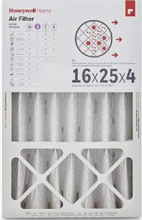
The best amc hepa fan filter for photolithography cleanrooms must first meet extremely high particle efficiency standards.Most advanced fabs operate at ISO Class 1 or ISO Class 2 environments,where airborne particle concentration is strictly controlled.A ULPA-grade filter with 99.9995%efficiency at 0.12μm is often required.However,particle efficiency alone is not sufficient.The molecular filtration layer,typically composed of specially treated activated carbon or chemical media,must be engineered to remove acidic gases(SOx,NOx),basic gases(NH3,amines),and condensable organic compounds.
Another important consideration is outgassing control.The materials used in the amc hepa fan filter housing,sealants,and filter media must exhibit ultra-low outgassing properties.Any internal emission from the filter itself can compromise photolithography performance.For EUV lithography tools in particular,molecular contamination tolerance is extremely low,and even parts-per-billion levels of certain compounds can degrade optical systems.
Airflow uniformity is equally critical.A photolithography cleanroom relies on laminar flow to maintain consistent exposure conditions.The best amc hepa fan filter should provide stable airflow with minimal turbulence and low vibration.Advanced EC motors with precise speed control help maintain consistent face velocity across the filter surface.Uneven airflow can cause localized contamination or temperature gradients,directly impacting critical dimension control.
Pressure drop and energy efficiency also influence filter selection.While adding molecular filtration media improves AMC removal efficiency,it can increase initial resistance.A well-designed amc hepa fan filter balances adsorption capacity with optimized airflow channels to minimize pressure drop.Lower resistance reduces fan energy consumption and extends system life,which is essential in 24/7 semiconductor manufacturing environments.
Filter lifetime is another major concern for procurement teams.In a photolithography cleanroom,molecular Filters saturate over time depending on AMC concentration levels.The best amc hepa fan filter should provide predictable adsorption capacity and allow easy replacement without disrupting cleanroom operations.Some advanced systems offer modular chemical media replacement while retaining the particle filter structure,reducing downtime and operational cost.
Compatibility with existing FFU ceiling grids must also be considered.Many fabs retrofit existing HEPA fan filter units with AMC-capable upgrades.Therefore,dimensions,mounting interfaces,and control systems should match industry standards.A custom-engineered amc hepa fan filter solution may be necessary for older facilities upgrading to more advanced process nodes.
Testing and validation are crucial before final installation.Reliable suppliers provide AMC removal efficiency data based on standardized testing conditions,including upstream and downstream concentration measurement.Real-time AMC monitoring in the lithography bay helps validate performance after installation.Selecting a supplier who can provide detailed technical documentation and validation reports ensures compliance with semiconductor cleanroom requirements.
Ultimately,the best amc hepa fan filter for photolithography cleanroom environments is one that combines ultra-high particle efficiency,multi-layer molecular adsorption,low outgassing materials,stable laminar airflow,and long service life.It should be engineered specifically for semiconductor fabs rather than adapted from general industrial cleanroom solutions.
As photolithography technology advances toward smaller nodes and higher precision,contamination tolerance becomes even tighter.Investing in a high-quality amc hepa fan filter is not merely a cleanroom upgrade;it is a yield protection strategy.For semiconductor manufacturers seeking improved process stability and reduced defect density,selecting the right filtration partner is a critical step toward sustainable production excellence.