Air quality management is a key factor in modern electronics manufacturing.Factories producing printed circuit boards,semiconductor components,and automotive electronics must maintain strict environmental standards to avoid contamination.One of the most important components in the air filtration system is the Primary Filter,which serves as the first stage of protection against airborne particles.
The efficiency level of a Primary Filter determines how effectively it can capture dust and other contaminants before the air moves to secondary filtration stages.In electronics factories,selecting the right filtration efficiency is essential to ensure both clean air and optimal system performance.
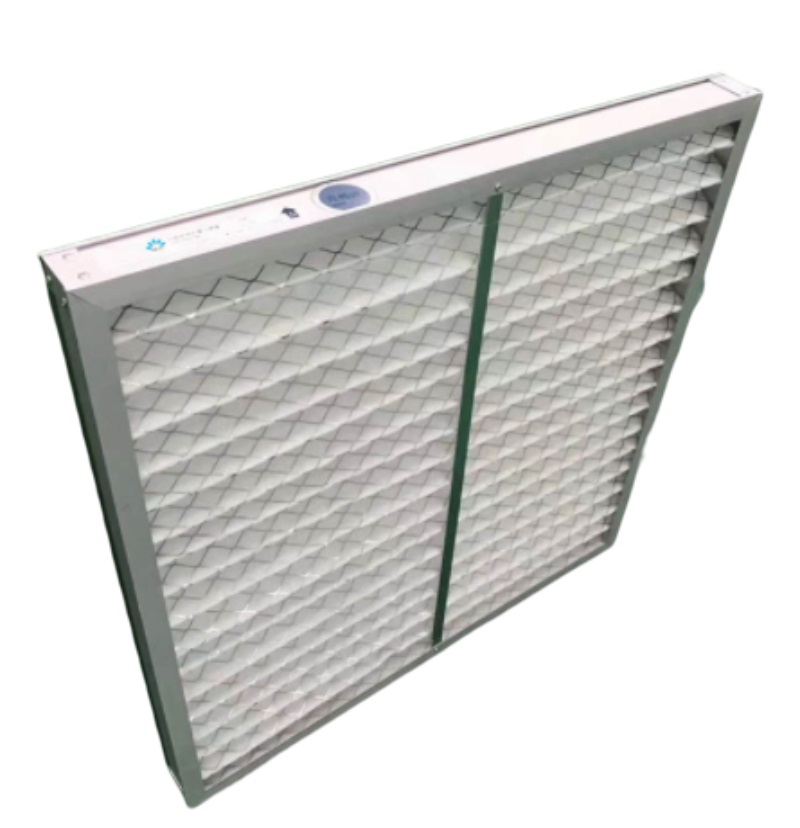
Typically,Primary Filters used in industrial air handling systems are designed to remove large particles ranging from 5 to 10 microns.These filters usually have an efficiency rating between G3 and G4 according to international filtration standards.This efficiency level is suitable for capturing coarse dust,fibers,and other airborne particles that are commonly found in manufacturing environments.
Choosing the correct efficiency level for a Primary Filter depends on several factors,including the cleanliness requirements of the production area,the type of equipment used,and the airflow system design.For example,electronics factories with standard assembly areas may use G3 or G4 Primary Filters to remove large contaminants before the air reaches medium-efficiency filters.In facilities with higher cleanliness requirements,such as SMT workshops or semiconductor production lines,the Primary Filter works together with secondary and HEPA Filters to create a multi-stage filtration system.
Another important consideration when selecting a Primary Filter is airflow resistance.While higher efficiency filters capture more particles,they may also increase air resistance and energy consumption.Therefore,manufacturers must find a balance between filtration efficiency and airflow performance to ensure the air handling system operates efficiently.
A well-selected Primary Filter can also help reduce maintenance costs in electronics factories.By removing large particles early in the filtration process,the Primary Filter protects downstream filters from clogging too quickly.This not only extends the lifespan of high-efficiency filters but also reduces the frequency of system maintenance and filter replacement.
In addition,maintaining the correct efficiency level for the Primary Filter supports stable production conditions.Clean air reduces the risk of dust contamination on electronic components,helping manufacturers maintain consistent product quality and meet strict industry standards.
Overall,the ideal efficiency level of a Primary Filter in electronics factories depends on the specific production environment and filtration system design.However,most facilities benefit from using Primary Filters with G3 to G4 efficiency levels as the first stage of filtration.When properly selected and maintained,the Primary Filter becomes a key element in ensuring reliable air quality and efficient manufacturing operations.