In advanced semiconductor manufacturing,especially at 3nm and 2nm process nodes,even the smallest environmental instability can lead to significant yield loss.As chip structures become more complex and sensitive,maintaining ultra-clean conditions inside fabs is no longer optional—it is essential.This is where the high-efficiency filter plays a critical role in modern production environments.
A high-efficiency air filter system is designed to remove extremely fine particles and contaminants from the air,including dust,aerosols,and microscopic airborne impurities.In semiconductor cleanrooms,these systems often work alongside HEPA Filters,ULPA filters,and advanced cleanroom air filtration systems to ensure a stable and contamination-free environment.
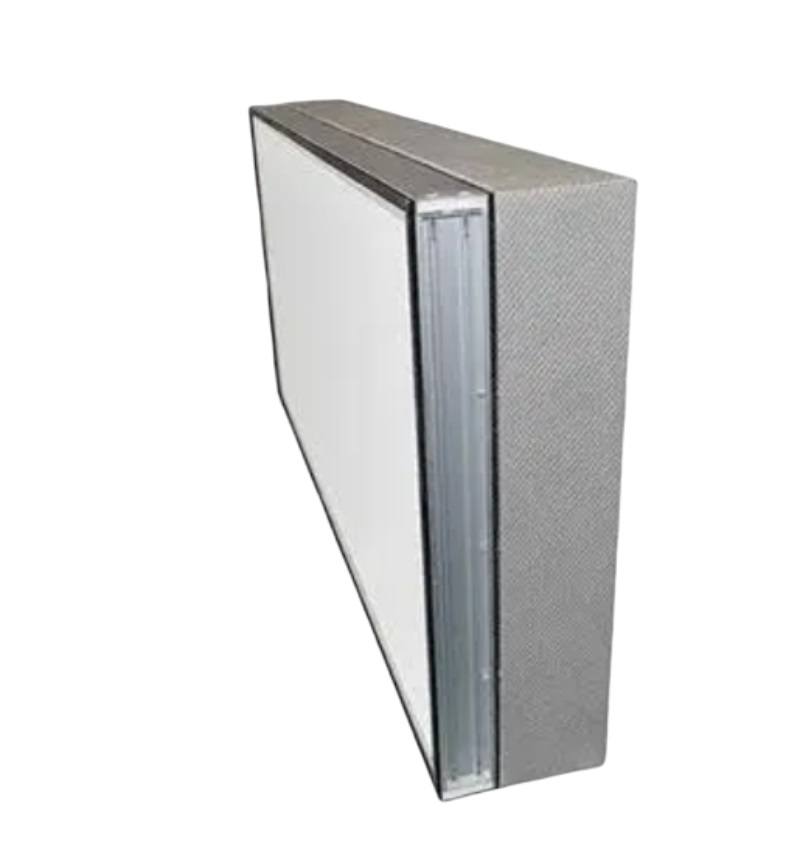
In semiconductor fabs,wafer production requires extreme precision.A single particle invisible to the human eye can damage circuit patterns during lithography.High-efficiency filters help by continuously purifying airflow and maintaining strict ISO cleanroom standards.
They are especially important in EUV lithography environments,where shorter wavelengths and smaller nodes make processes highly sensitive to contamination.By reducing airborne particles,these filters help improve pattern accuracy and reduce defect rates.
Modern high-efficiency filtration systems offer several important functions:
Efficient removal of sub-micron particles
Stable airflow distribution in cleanroom environments
Integration with fan filter units(FFU)
Low pressure drop for energy efficiency
Long service life with consistent performance
Compatibility with semiconductor cleanroom filtration systems
These features make them a core part of advanced manufacturing infrastructure.
In semiconductor production,“yield”refers to the percentage of functional chips produced from each wafer.Airborne contamination is one of the hidden factors that directly impacts yield performance.
High-efficiency filters help reduce:
Particle contamination on wafers
Defects during photolithography
Equipment corrosion caused by airborne chemicals
Process instability in sensitive production steps
By maintaining ultra-clean air,fabs can significantly improve production stability and reduce costly wafer rework.
High-efficiency Air Filters are widely used in:
Semiconductor manufacturing plants
EUV and photolithography cleanrooms
OLED and display panel production
Pharmaceutical cleanrooms
Precision electronics assembly
AI data center environments
Lithium battery production facilities
Across these industries,air purity is directly linked to product reliability and performance.
What is a high-efficiency air filter used for?
A high-efficiency air filter is used to remove fine airborne particles and maintain clean air in controlled environments such as semiconductor fabs and cleanrooms.
How do high-efficiency filters improve semiconductor yield?
They reduce particle contamination during wafer processing,helping to prevent defects and improve production yield.
Are high-efficiency filters the same as HEPA Filters?
Not exactly.Hepa Filters focus on particle removal,while high-efficiency filtration systems may include multi-stage filtration technologies for broader contamination control.
Where are high-efficiency filters commonly used?
They are used in semiconductor fabs,pharmaceutical cleanrooms,display manufacturing,and advanced electronics production facilities.
Why are air filters important in 3nm chip production?
At smaller process nodes like 3nm,even microscopic particles can damage circuit patterns,making ultra-clean air essential for stable manufacturing.